11 Expert Tips for Preparing Your Home for Sale in Summerlin's Competitive Market
Preparation is what separates sellers who walk away with top dollar from those who leave money on the table. Sellers who time their listing right could gain about $26,000 more than those listing at the start of the year, and that figure does not even account for what strategic repairs, staging, and pricing can add on top. My track record as a top Realtor serving Summerlin spans hundreds of sellers, each one proof that deliberate preparation pays off. The 11 expert strategies I cover here, from pre-listing inspections to optimal listing timing, are the exact ones I use to help my clients maximize their returns. Trust me, the difference between a rushed listing and a properly prepared one can mean tens of thousands of dollars in your final proceeds.
Get a Pre-Listing Home Inspection
Why Early Inspections Matter in Summerlin

Ordering a pre-listing inspection puts you in control of the repair timeline and contractor selection before buyers start making demands. 85% of buyers get at least one inspection during their purchase process, so those issues will surface regardless; the only question is whether you discover them on your terms or scramble to respond during negotiations. Home inspection issues rank as the second most common reason deals fall through after financing problems. When buyers uncover unexpected problems, they negotiate emotionally, requesting price reductions or extensive repairs that often exceed actual fix costs. Identifying issues early positions you to handle repairs strategically rather than defensively. The inspection typically costs between $300 and $600 for most Summerlin homes and takes 2 to 4 hours to complete. Worth noting: 25% of sellers get this done before ever contacting a real estate agent, making it the third most common pre-listing activity after home improvements and pricing research.
What the Inspection Covers
A licensed inspector evaluates your property exactly the way a buyer's inspector would, examining:
- Heating and cooling systems
- Electrical panels and wiring
- Plumbing and visible pipes
- Structural components and foundation
- Roof condition and integrity
- Interior walls, ceilings, and floors
- Exterior siding, windows, and doors
The inspector compiles all findings into a detailed report, highlighting issues and recommending repairs or replacements. That documentation becomes your action plan for addressing concerns before your home ever hits the market.
How to Address Findings Before Listing
Work with your agent to determine which repairs truly warrant immediate attention – not every issue requires fixing. Serious buyers sometimes prefer handling certain upgrades themselves to their own specifications.
Major problems like failing foundations, plumbing issues, or electrical hazards should be resolved before listing. These are the deal-breakers that can derail sales entirely when discovered during buyer inspections. Smaller issues like loose faucets or minor leaks can be fixed cost-effectively to remove red flags without significant investment.
Once the inspection reveals known problems, disclosure laws require you to inform buyers. Completing repairs before listing gives you control over contractor selection and costs, whereas buyer-requested repairs often arrive with premium pricing and tight deadlines. Document all completed work with receipts; this justifies your asking price during negotiations and satisfies re-inspection requirements.
Refresh Interior and Exterior Paint with Neutral Colors

Fresh paint delivers one of the strongest returns of any pre-sale investment, and it does so without touching your home's structure. The right neutral colors give buyers the blank canvas they need to mentally place their furniture, their artwork, and their lives inside your Summerlin property.
Color Selection for Summerlin Homes
Summerlin's intense sunlight changes everything about how color behaves on your walls. Pure white yellows quickly under strong desert sun exposure, so neutrals with subtle green or stone undertones are the smarter choice. Light-reflective colors make rooms feel larger and brighter, which particularly benefits smaller spaces in older Summerlin villages. Warm neutrals consistently outperform trendy alternatives. Greige that blend of gray and beige strikes the right balance without pulling too warm or too cold. Specific shades like Sherwin-Williams Agreeable Gray or Benjamin Moore Edgecomb Gray hold up beautifully across different design styles. Soft taupe and clay beige give you a slightly richer feel while keeping that essential neutral appeal intact.
Pay close attention to undertones, as they shift dramatically depending on your home's natural light. North-facing rooms get less sun, so colors with an LRV of 60 or higher are needed to counteract blue tones. Test samples on multiple walls and observe them at different times of day before committing.
Interior Paint Priorities
Color consistency across rooms improves perceived layout and overall value. Fresh paint signals to buyers that your home is well-maintained and move-in ready; it reduces their mental list of work before they even make an offer.
Living rooms set the tone since buyers see that space first, making soft greige, warm white, or light taupe the strongest choices. Kitchens need to feel clean and bright, so creamy white, sage green, or soft taupe work best. Bedrooms call for pale blue or blue-gray, which creates the restful atmosphere buyers expect.
Bold or trendy colors work against you here. Deep emerald and matte black may feel current, but they actively limit your buyer pool. Cold flat white reads as clinical rather than welcoming. Low-quality paint is equally damaging; it requires multiple coats and scuffs during showings, undermining the very impression you are trying to create.
Exterior Paint and Curb Appeal Impact
Your exterior color is the first thing buyers judge, and Summerlin's desert surroundings reward sophisticated neutrals. Shades like Alabaster or Repose Gray complement virtually any architectural style. Greige tones such as Accessible Beige balance gray and beige in a way that photographs exceptionally well.
Warm beiges and khakis like Shiitake add depth without overwhelming the eye. For homes with modern aesthetics, Foggy Day blends gray's familiarity with a quiet blue tranquility. Earth tones blend naturally with the surrounding desert landscape, creating visual harmony that buyers respond to immediately.
So, before you finalize any exterior color, consider your roof shade, stone accents, and landscaping together. Test colors on different sections of your exterior and observe them morning, midday, and evening lighting conditions here shift dramatically, and what looks right at noon can look entirely different at dusk.
Replace or Deep Clean Carpets and Flooring
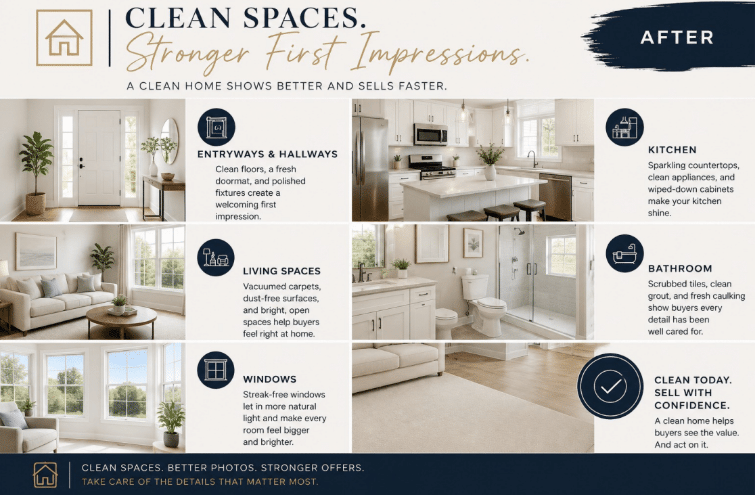
Flooring is one of the first things buyers notice – and one of the fastest ways to lose an offer before negotiations even begin. The decision between cleaning and replacing comes down to one question: do the visible problems repel buyers, or do they simply show normal wear?
When to Replace vs. Clean
Start with professional cleaning before considering replacement. A deep clean runs $ 0.25 to $0.50 per square foot can prevent a $2.00 to $8.00 per square foot replacement. Cleaning a single bedroom costs $40 to $90, while replacing that same space runs $200 to$900. So, reach for the cleaning quote first.
Replace carpet only when it shows visible flaws buyers cannot overlook: holes creating tripping hazards, wrinkles, stains surviving professional cleaning, or persistent pet and smoke odors. Pet odor is particularly damaging to sales potential – buyers either leave immediately or mentally subtract amounts far exceeding actual carpet costs. Marginal carpet reads as acceptable, but defective carpet triggers immediate price reduction demands.
Dated flooring also works against you at the negotiating table, not just during showings. Three different carpet types across bedrooms and hallways make floor plans feel fragmented rather than cohesive, and buyers in today's market use every visible flaw to justify lower offers.
Best Flooring Options for Summerlin Buyers
Luxury vinyl plank has largely replaced hardwood as the material buyers request in mainstream markets. LVP works on wet surfaces, resists scratches and breaks, and repairs relatively easily compared to alternatives. Buyers perceive laminate as budget material despite technical improvements, making LVP the superior choice for replacement scenarios.
For optimal results, consider partial replacement: install LVP in entry, hallway, and living room while keeping bedroom carpet if it remains in good condition. This approach delivers the best return without unnecessary spending in lower-traffic areas.
Cost vs. Return on Investment
Carpet traditionally recovers only 25% to 40% of installation costs when homes sell. That figure, however, misses the larger negotiation reality. Dated or damaged flooring costs sellers far more at the negotiating table through repair credits and price drops than the actual replacement ever would.
At contractor pricing, new LVP or carpet runs $3,000 to $4,000 in typical homes, as opposed to the $7,000 to $9,000 concession buyers routinely request for dated flooring. A sub-$4,000 flooring investment prevents substantially larger concession demands in most cases. Schedule flooring work during late fall through early spring, when contractors offer promotional pricing during their slow season.
Optimize Desert Landscaping and Curb Appeal

Buyers form their first opinion before they ever step inside and in Summerlin's desert environment, that opinion is shaped entirely by what they see from the street. Exterior presentation carries the same weight as interior conditions, and the strategies that work here differ meaningfully from traditional landscaping approaches.
Essential Landscape Cleanup Tasks
The front yard is where first impressions are made, so that is where your initial efforts belong. Remove any plants or trees that drop excessive leaves or fruit, as these create ongoing cleanup demands during showings. A palm tree dropping purple plums, for example, requires daily hosing during listing periods consuming water and creating maintenance headaches that buyers will notice.
Clear debris like sticks, leaves, and grass clumps after mowing. Store hoses, tools, and yard equipment out of sight. Clean lines and debris-free yards keep buyer attention on your property rather than on perceived maintenance issues. Outdoor lighting is worth adding too, as it showcases your home after dark while improving security.
Desert Xeriscape Best Practices
Desert landscaping done well emphasizes drought-resistant plants, efficient irrigation, and hardscape elements that create stunning outdoor spaces. Up to 70% of household water usage in arid climates goes toward landscaping, making xeriscaping not just visually appealing but a financially attractive selling point for buyers who understand long-term ownership costs.
Native plants succulents, cacti, agave, yucca, and drought-tolerant shrubs require minimal water once established. Group plants with similar water needs to maximize irrigation efficiency. This approach creates lush, inviting environments, not just convenient ones, while conserving resources buyers genuinely appreciate.
Decorative gravel, sculptural rocks, and native plantings transform yards into visually compelling spaces that complement Summerlin's natural desert backdrop. Mulch applied around plants retains moisture, regulates temperature, and prevents weeds. Gravel mulch specifically allows water infiltration while preventing evaporation, making it ideal for desert conditions.
Drip Irrigation and Outdoor Maintenance
Drip irrigation systems require yearly maintenance, and twice annually is the standard I recommend to my clients. Check pressure at each lateral valve most drip systems operate between 20 to 50 psi, and high pressure causes emitters to malfunction and pop off tubing, wasting significant water.
So, flush mains, submains, and laterals at least three times per season with clean water. Remove end caps on irrigation lines to flush debris that clogs emitters. Clean filter screens regularly, as blocked filters impede water flow and cause system-wide performance issues that buyers will see reflected in your landscaping.
Stage Your Home for Move-In-Ready Appeal
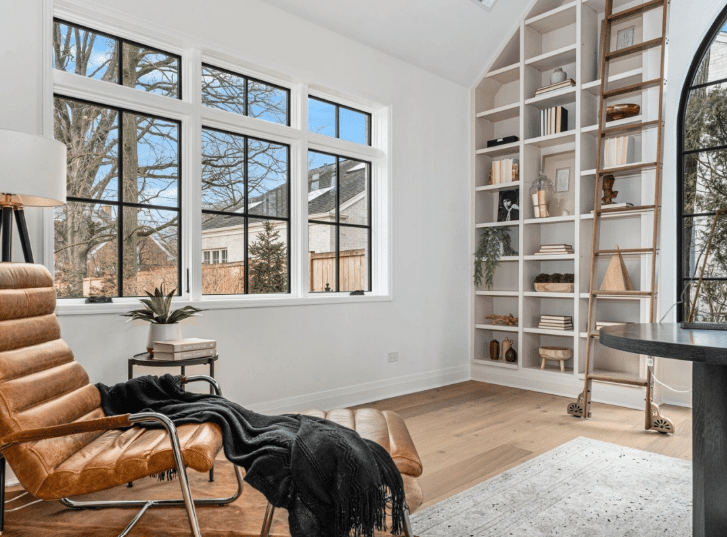
Staging is not decorating it is the deliberate process of highlighting your home's best features while eliminating distractions that prevent buyers from picturing themselves living there. The numbers reinforce this: 75% of buyers find it easier to visualize a staged property as their future home, and 70% specifically seek move-in ready properties. That is a significant portion of your buyer pool making emotional decisions before they ever submit an offer.
Professional Staging vs. DIY Approach
DIY staging saves money and gives you timeline flexibility, but professional stagers bring design expertise and furniture inventories that are specifically matched to what today's buyers want. They understand color theory, lighting, and spatial flow in ways that prevent rooms from feeling cluttered or mismatched and they know how to draw attention to architectural details buyers might otherwise walk right past.
A hybrid approach works well here. Tackle depersonalization yourself, then bring professionals in for the rooms that carry the most weight. Living rooms, primary bedrooms, and dining rooms are the three spaces buyers care about most, so focus your professional investment there. Sixty-two percent of agents report staging directly affects how quickly homes sell, which means the cost of staging is far smaller than the cost of sitting on the market.
Highlighting Outdoor Living Spaces
Summerlin's climate makes outdoor spaces a genuine selling feature, not an afterthought. Buyers expect properties where indoor and outdoor living connect seamlessly, so stage your patio or backyard with comfortable seating, outdoor dining setups, and entertainment areas that suggest relaxed desert evenings. Create continuity between interior and exterior through complementary furniture and décor, clean all patio furniture, remove personal yard décor, and add outdoor throw pillows in neutral tones. Outdoor spaces create both first and final impressions give them the same attention you give your interiors.
Neutralizing Personal Items and Decor
Family photos, religious items, sports memorabilia, and collections need to come down. These personal touches shift a buyer's focus away from your home and onto your life. Hunting trophies, political signs, and seasonal decorations should be stored away entirely. Paint over bold accent walls with warm white, greige, or light beige, and swap out flashy hardware for simple brushed nickel or black finishes. The goal is a blank canvas that feels genuinely inviting not one that imposes your personality on the people you need to say yes.
Order Your HOA Resale Package Early
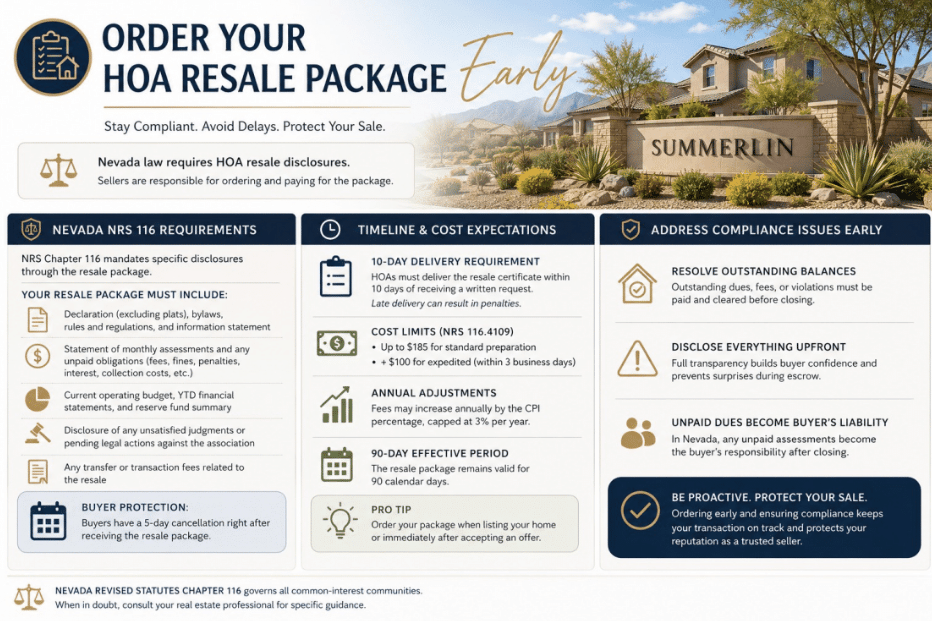
Most Summerlin homes fall under HOA governance, and the resale package requirement is one disclosure detail that can derail your closing if you treat it as an afterthought. Nevada law takes this seriously and so do I when advising my sellers.
Nevada NRS 116 Requirements
Nevada Revised Statutes Chapter 116 governs all common-interest communities and mandates specific disclosures through the resale package. The seller bears responsibility for ordering and paying for these documents, not the buyer or agent.
Your resale package must include the declaration (excluding plats), bylaws, rules and regulations, and an information statement. The association also provides a statement detailing monthly assessment amounts and any unpaid obligations management fees, transfer fees, fines, penalties, interest, collection costs, foreclosure fees, and attorney's fees. Beyond that, the package covers the current operating budget, year-to-date financial statements with reserve fund summaries, and disclosure of any unsatisfied judgments or pending legal actions against the association. Any transfer or transaction fees tied to the resale must be documented as well.
Buyers receive a 5-day cancellation right after receiving the resale package, and purchase contracts must include this provision.
Timeline and Cost Expectations
Nevada enforces one of the strictest delivery requirements in the nation. Associations must deliver the resale certificate within 10 days of receiving a written request a hard deadline that carries penalties from the Nevada Real Estate Division if missed. Fee limits are strictly capped: up to $185 for standard preparation, plus an additional $100if you request expedited processing within 3 business days. These amounts may increase annually by the Consumer Price Index percentage, capped at 3% per year. The resale package remains effective for 90 calendar days.
Addressing Compliance Issues Proactively
Order your resale package when listing your home or immediately after accepting an offer. Outstanding balances or HOA violations must be resolved before finalizing the sale; waiting until closing to address these is a mistake I consistently help my clients avoid. Unpaid dues become the buyer's financial obligation after closing in Nevada, making full, upfront disclosure not just the right approach, but the only one that protects your sale.
Resolve SID/LID Assessments Before Listing
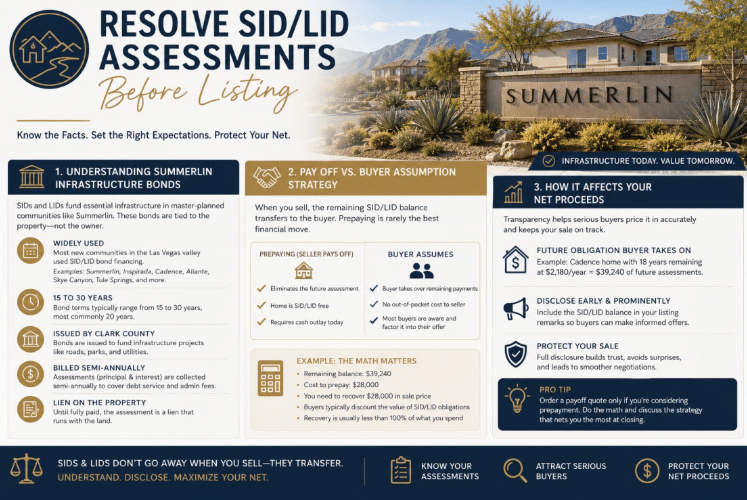
Special Improvement District (SID) and Local Improvement District (LID) assessments are infrastructure bonds tied directly to specific properties in Summerlin not to the owner, but to the land itself. Understanding how they work before you list is critical to protecting your net proceeds.
Understanding Summerlin Infrastructure Bonds
Almost every greenfield master plan in the Las Vegas valley Summerlin, Mountain's Edge, Aliante, Inspirada, Cadence, Lake Las Vegas, Skye Canyon, Tule Springs, and Coyote Springs- relied on SID or comparable bond financing at the original development stage. The bonds run 15 to 30 years, typically 20, and once paid off, the home is free and clear of the district. Clark County generally issues these bonds to cover infrastructure project costs. The assessments, including principal and interest, are billed and collected semi-annually to cover debt service and administrative expenses over the designated bond period. Until fully paid, a special assessment functions as a lien on the property.
Pay Off vs. Buyer Assumption Strategy
When you sell, the SID and LID assessments transfer with the property to the next owner. The buyer inherits the remaining annual assessments and the remaining bond term the seller does not pay off the balance at closing. For sellers considering prepayment to maximize sale price, the answer is occasionally yes, but rarely. The math tells the story: spending $28,000 to eliminate a remaining $39,000 of assessments makes the home SID-free, but you now need to recover that $28,000 cash outlay in the sale price. Buyers today are generally aware of SIDs and price them in proportionally, so the recovery is usually less than 100% of what you spent.
How It Affects Your Net Proceeds
A Cadence home with 18 remaining years of $2,000 annual SID assessments carries over $35,000 of future obligation that the buyer must absorb. The best approach is straightforward – disclose the SID balance prominently in the marketing remarks so serious buyers can price it in accurately, rather than surfacing it as a surprise during negotiations. Transparency here protects your sale timeline and builds the kind of buyer confidence that keeps deals together.
Complete Deferred Maintenance and Minor Repairs
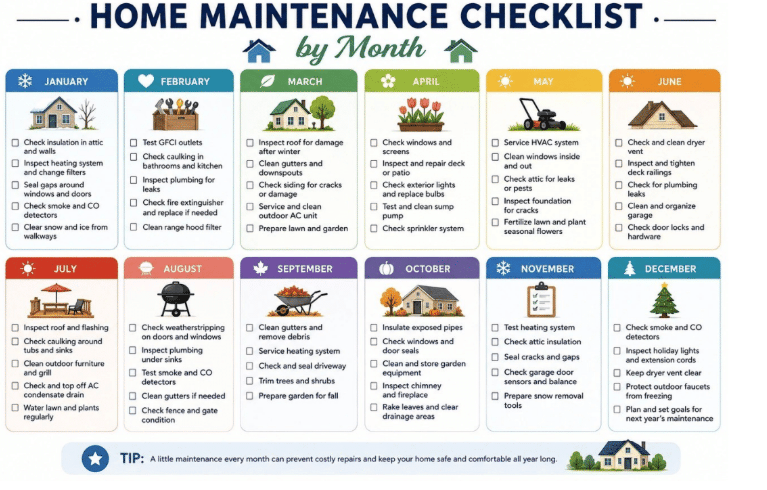
Image Source: Renoverra
Small maintenance issues tell buyers a story and it is never the one you want them reading. Leaky faucets, running toilets, squeaky doors, windows that won't open properly, missing caulk, cracked grout, loose railings, or outdated HVAC filters do not just signal individual problems; they signal a pattern of neglect. Buyers purchase with emotion first, seeking safety and confidence, and deferred maintenance eliminates both – prompting lower offers, repair credit demands, or complete walk-aways.
Common Issues That Derail Negotiations
The uncertainty buyers feel matters far more than any individual repair cost. Buyers already stretched to their budget face longer inspection reports on poorly maintained homes, and fear takes over quickly. Common reasons buyers walk away include perceived high repair costs, safety concerns, insurance difficulties, low appraisals, and fear of future problems. Sellers who understand this reality address maintenance proactively rather than waiting for buyer inspections to surface issues at the worst possible moment.
Priority Repair Checklist
Tier 1 repairs cover safety and structural concerns: roof damage, foundation cracks, electrical hazards, plumbing leaks, and mold. These are deal-killers outright, as lenders may refuse financing for unresolved safety issues. Tier 2 addresses functional repairs: HVAC servicing, water heater issues, broken windows, and non-functional appliances. Tier 3handles cosmetic fixes: fresh paint, caulking, hardware updates, patching walls, and light bulbs. Work through these tiers in order, and you present buyers with a home that feels cared for at every level.
Cost-Effective Fix Strategies
The goal here is not perfection it is eliminating the triggers that give buyers leverage. Extensive repair lists can actually work against productive negotiations, so focus on big-ticket items that genuinely affect buyer confidence. Skip any repair where the cost exceeds twice the value it adds to your sale price. Adjust your asking price instead, or offer repair credits – buyers respond well to transparency, and it keeps negotiations moving forward rather than stalling over individual line items.
Invest in Professional Photography and Virtual Tours

Your listing photos are the first showing and for most buyers, they determine whether a second one ever happens. The numbers make this impossible to ignore: over 90% of buyers search online during their home search, and 80% specifically told Zillow they found their home that way. Listings with professional photography sell 30% faster than those with amateur photos, and homes with 20 photos spend just 32 days on market compared to 70 days for properties with only one photo. The gap between professional and amateur presentation is not a minor detail it is what gets your Summerlin home noticed in a crowded field.
Why Photography Quality Matters
Professional photography runs $150 to $200 for most Summerlin homes. Virtual tours add$150 to $300 for basic 360° options, or $250 to $500 for professional 3D tours. Those costs return far more than they require – 3D virtual tours help homes sell 14% faster and receive37% more views than listings without them. What sets professional photography apart is not just image quality; it is the ability to attract serious buyers before they ever set foot through the door.
Best Time of Day for Summerlin Homes
Timing your shoot based on home orientation is something most sellers overlook, and it directly affects shadow and light quality in every frame. East-facing properties photograph best in morning light, while west-facing homes perform strongest during afternoon sessions. North-facing homes work well between 10am and 2pm, and south-facing properties need early morning or evening shoots.
Twilight photography captured about 30 minutes after sunset – produces dramatic hero images with glowing interior lights set against deep blue skies. This technique is particularly well-suited to Summerlin properties with pools, outdoor entertainment spaces, or professional landscape lighting, where that golden-hour quality elevates perceived value in a single frame.
Showcasing Mountain and Strip Views
Summerlin's Red Rock views and Strip sightlines are genuine selling assets – so treat them that way. Frame interior shots toward windows that capture those sightlines, and clean windows inside and out so the views read clearly rather than through haze. Aerial drone photography adds an entirely different dimension, showing property orientation and surrounding context that no ground-level shot can provide. So, when I coordinate photography for my clients, I make sure every angle that adds value is captured not just the obvious ones.
Price Your Home Using Village-Specific Comps

Pricing your Summerlin home on community-wide averages is one of the most costly mistakes a seller can make. Comparable sales must share similar physical and legal characteristics site, room count, finished area, style, and condition and the market area itself is defined as the geographic region from which most demand comes and where most competition is located. Get that foundation wrong, and everything else you have done to prepare your home works against you.
Why Community Medians Don't Work
Sale activity from within the neighborhood is the best indicator of value, as sales prices of comparable properties from the same location reflect the same positive and negative location characteristics. A home in The Ridges commands different pricing than a similar-sized property in Sun City Summerlin, even though both carry a Summerlin address. Appraisers must be specific with respect to distance in terms of miles when describing proximity of comparable sales to the subject property and the same precision matters when you price your home.
Analyzing Your Village's Recent Sales
Appraisers select a minimum of three recently closed sales that closely resemble the subject property in terms of location and relevant characteristics. Properties should be compared based on square footage, bedroom and bathroom count, lot size, and amenities not price alone. Recent sales provide snapshots of current market conditions, making them far more relevant than older transactions. So, after I review your village's recent activity, I will consult you on where your home genuinely stands and what pricing strategy gives you the strongest position.
Avoiding the Aspirational Pricing Trap
Overpricing backfires rather than leaving room to negotiate. In November alone, 54.5% of homes for sale sat on the market for at least 60 days without finding a buyer, and the typical home that went under contract took 43 days the slowest pace for that month since 2019. Homes priced right generate more interest, not less, and often attract multiple offers that push the final price higher. What sets my approach apart here is my drive to help you find the best price, not just the most optimistic one.
Schedule a Professional Move-Out Deep Clean
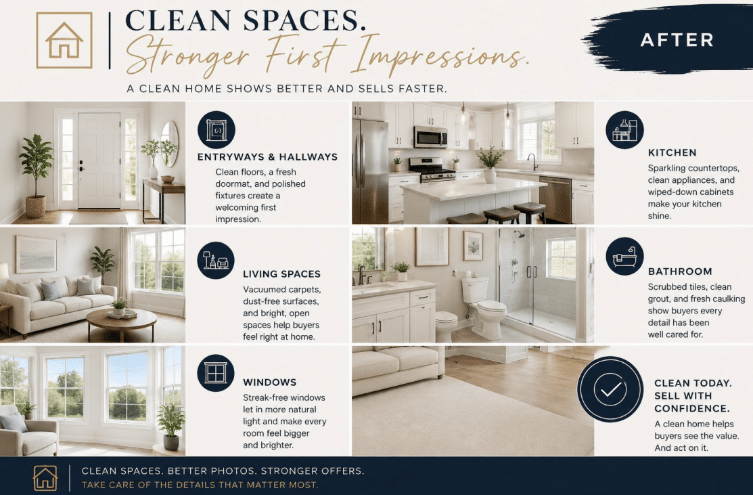
Buyers see your home first through listing photos, and 87% of home buyers consider those photos the most important feature in online listings. A professional deep clean is what makes the difference between photos that stop buyers mid-scroll and photos that get passed over. Move-out cleaning is not regular housekeeping it requires a level of detail that photographers and buyers notice immediately, from scrubbed appliance interiors to spotless window tracks.
What Move-Out Cleaning Includes
Professional deep cleaning covers kitchens, bathrooms, living areas, and sleeping areas through structured checklists. This means scrubbing appliances inside and out, washing baseboards throughout the entire property, cleaning windows and tracks, vacuuming or mopping all floors, and eliminating odors. Professional teams follow approaches like the 49-Point Checklist tackling accumulated dust, grime, and tough messes that routine cleaning never reaches. The average cost for most homes runs around $360, a modest investment relative to what clean, sharp listing photos deliver in buyer interest.
Timing the Clean With Other Preparations
Schedule your deep clean about a week before staging begins. This window keeps the home fresh without giving dust and daily living a chance to undo the work before viewings start. The clean must happen before listing photos not after since that is where most buyers begin forming their opinions.
Final Touches Before Photos and Showings
Once the clean is complete, walk every room and check ceiling fans, light fixtures, and appliance exteriors for anything the team may have missed. Empty all trash bins and store them completely out of sight before photo sessions. Open curtains and blinds only after windows have been cleaned thoroughly, since smudges and streaks show clearly in high-resolution images and undermine an otherwise excellent presentation.
Time Your Listing for Peak Buyer Activity

Timing is one of the most underestimated pricing tools available to Summerlin sellers. The calendar you choose to list on is not just a scheduling decision it is a financial one, and the difference can be measured in real dollars.
Summerlin's Spring and Fall Selling Windows
Sellers who listed in the last two weeks of May earned an extra 1.7% compared to earlier months. Activity typically picks up between February and March, with May and June representing the busiest months. Spring creates competitive bidding environments where appropriately priced homes attract multiple offers quickly, which is exactly the dynamic you want working in your favor.
Fall offers a different but equally valid strategic window. October through November brings less buyer competition, creating conditions where serious, motivated buyers are the ones at the table. Sellers who list between December and March often net more above asking price than those listing June through November proof that the off-peak window is not something to dismiss outright.
Avoiding the Summer Heat Slowdown
Buyer activity from July through September decreases compared to spring peaks and fall pickups. That said, serious buyers remain active over 16,000 existing homes sell daily during summer months, just 3% lower than spring. Extreme Nevada temperatures filter out casual lookers, so the buyers touring your home in July are not browsing; they are ready to act. The opportunity is real, not just the most convenient time to list.
Relocation Buyer Patterns
Corporate relocations peak during January and February. These buyers need quick closings before job start dates, which creates less price-sensitive demand a distinct advantage for sellers who position their homes correctly during that window. Summer also attracts relocation buyers moving before school years begin, particularly families and university-related professionals. So, after I get to know your timeline, your priorities, and your goals, I will help you identify the window that puts the most money in your pocket – not just the one that gets your home listed fastest.
Comparison Table: Home Preparation Strategies for Summerlin Market
Strategy | Primary Benefit | Cost Range | Timeline | Key Statistics | Critical Actions |
|---|---|---|---|---|---|
Get a Pre-Listing Home Inspection | Control repair timeline and contractor selection before buyer demand | $300-$600 | 2-4 hours to complete | 85% of buyers get at least one inspection; home inspection issues are 2nd most common | Address major problems (foundation, plumbing, electrical); document all repairs with receipts |
Refresh Interior and Exterior Paint with Neutral Colors | Most cost-effective transformation without structural changes | Not mentioned | Not mentioned | Fresh paint signals maintained, move-in ready home | Use neutrals with 60+ LRV for north-facing rooms; choose greige, warm white, light taupe; test samples in different lighting |
Replace or Deep Clean Carpets and Flooring | Prevent buyer walkaways and price reduction demands | Deep clean: $0.25-$0.50/sq ft; Replace: $2.00-$8.00/sq ft; Typical home: $3,000-$4,000 | Schedule late fall through early spring for promotional pricing | Carpet recovers only 25-40% of costs, but dated flooring triggers $7,000-$9,000 concessions | Replace only if holes, wrinkles, permanent stains, or pet odor sexist; consider LVP for main areas |
Optimize Desert Landscaping and Curb Appeal | Create strong first impression within seconds of arrival | Not mentioned | Not mentioned | Up to 70% of household water usage goes toward landscaping in arid climates | Focus on front yard; use drought-resistant plants; remove debris; maintain drip irrigation 2x annually |
Stage Your Home for Move-In-Ready Appeal | Help buyers visualize property as their future home | Professional staging costs not specified | Not mentioned | 77% of buyers find it easier to visualize staged homes; 71% seek move-in ready properties; 62% of agents report staging affects sale speed | Focus professional help on the living room, primary bedroom, and dining room; remove personal items and photos; stage outdoor spaces |
Order Your HOA Resale Package Early | Prevent delays or derailed sales due to missing disclosures | Up to $185 standard; additional $100 for expedited (3 business days) | Must be delivered within 10days of request; effective for 90 days | Buyers receive 5-day cancelation right after receiving package | Order when listing or immediately after accepting offer; resolve outstanding balances and violations |
Resolve SID/LID Assessments Before Listing | Transparency about infrastructure bonds attached to property | Prepayment example: $28,000 to eliminate $39,240 remaining balance | 15-30 years typical bond term (usually 20 years) | Assessments transfer to buyer; prepayment rarely recovers 100% in sale price | Disclose SID balance prominently in marketing; consider buyer assumption vs. prepayment strategy |
Complete Deferred Maintenance and Minor Repairs | Eliminate signals of neglect that trigger buyer concerns | Not mentioned | Not mentioned | Home inspection issues are 2nd most common reason deals fall through | Prioritize Tier 1 (safety/structural), Tier 2 (functional), Tier 3 (cosmetic); skip repairs if cost exceeds 2x value added |
Invest in Professional Photography and Virtual Tours | Determine whether buyers schedule showings or scroll past listing | Photography: $150-$200; Virtual tours: $150-$300 (basic360°) or $250-$500 (professional 3D) | Shoot timing based on home orientation | 97% of buyers search online; professional photos sell homes32% faster;3D tours sell 14% faster with 37% more views | Schedule based on home orientation; capture twilight shots for pools/views; clean windows thoroughly |
Price Your Home Using Village-Specific Comps | Accurate pricing based on specific location characteristics | Not mentioned | Not mentioned | In November, 54.5% of homes sat on market 60+ days; typical home under contract took 43 days | Use minimum 3 recent sales from same village; compare square footage, bed/bath count, lot size, amenities |
Schedule a Professional Move-Out Deep Clean | Ensure property appears at absolute best for photos and showings | Average cost: $360 | Schedule about 1 week before staging begins | 87% of home buyers consider photos the most important feature in online listings | Use 49-Point Checklist approach; clean before listing photos; address kitchens, bathrooms, windows, baseboards |
Time Your Listing for Peak Buyer Activity | Maximize sale price through strategic timing | Not mentioned | Spring (Feb-March pickup, May-June busiest); Fall (Oct-Nov); Avoid July-Sept slow down | Sellers listing last 2 weeks of May earned extra 1.7%;sellers listing Dec-March net more above asking than June-Nov | Target spring for competitive bidding; consider fall for serious buyers; leverage relocation peaks (Jan-Feb) |
Conclusion
Selling in Summerlin's competitive market rewards preparation and these 11 strategies give you a clear, deliberate path from pre-listing inspection all the way through optimizing and strategic timing. You do not need to tackle everything at once. Start with the inspection and essential repairs, then work through staging, photography, and pricing as a logical sequence. My many repeat clients are a testament to what thorough preparation actually delivers, and I have guided hundreds of Summerlin sellers through this exact process with results that consistently prove the value of doing it right. The sellers who earn top dollar are not the ones who rush to list; they are the ones who take each step seriously. So, if you are ready to put your property in the strongest possible position, I am here to consult you on your options and craft a strategic roadmap leading to the outcome you deserve. Trust me to put my experience and proven track record to work for you.
Let's Connect.